Erin Jackson, a health care compliance attorney with Jackson LLP Healthcare Attorneys in Chicago, works with physical therapists (PTs) who want to start new practices. Female PTs often confide to Jackson that one reason for leaving previous employers is that they experienced sexual harassment or gender discrimination from male colleagues or supervisors.
Harassment

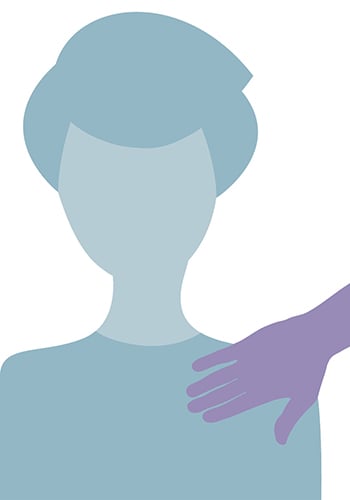
The sexual harassment about which the PTs most complain, Jackson says, tends to be sexual banter and unwanted physical contact. The discrimination involves being passed over for promotions and being excluded from practice decision-making, professional development, and other opportunities in favor of male colleagues. "They felt less valued as part of the skilled workforce compared with their male counterparts," Jackson says. "They realized they would not achieve the professional success they wanted."

Gender harassment—which includes sexual banter—is just one form of sexual harassment (itself a subset of "discriminatory behavior"). In fact, there are at least 3 categories of sexually harassing behavior. A recent report by the National Academy of Sciences (NAS)1 identified them as:

Log in or create a free account to keep reading.


Join APTA to get unlimited access to content.

  1. National Academies of Sciences, Engineering, and Medicine. 2018. Sexual Harassment of Women: Climate, Culture. and Consequences in Academic Sciences, Engineering, and Medicine. Washington, DC: The National Academies Press. https://doi.org/10.17226/24994.
  2. Charges Alleging Sex-Based Harassment (Charges filed with the EEOC) FY 2010-FY 2018. https://www1.eeoc.gov//eeoc/statistics/enforcement/sexual_harassment_new.cfm?renderforprint=1. Accessed November 1, 2018.
  3. What You Should Know About EEOC and the Enforcement Protections for LGBT Workers. https://www.eeoc.gov/eeoc/newsroom/wysk/enforcement_protections_lgbt_workers.cfm. Accessed November 1, 2018.
  4. Sex-based Discrimination. Webpage. US Equal Employment Opportunity Commission. https://www.eeoc.gov/laws/types/sex.cfm, Accessed November 1, 2018.
  5. Boissonnault JS, Cambier Z, Hetzel SI, et al. Prevalence and risk of inappropriate sexual behavior of patients toward physical therapist clinicians and students in the United States. Phys Ther. 2017;97:1084-1093.
  6. Swartout K. University of Texas Climate Survey. Report on the University of Texas System Campus Climate Survey. Johnson PA, Widnakk SE, and Benya FF. (eds.) In Sexual Harassment of Women: Climate, Culture, and Consequences in Academic Sciences, Engineering and Medicine. Washington, DC: The National Academies Press; 2018:1.

You Might Also Like...

Article

APTA Offers Insights on the Strategic Implementation of AI in Health Care to HHS

Mar 18, 2026

In February, APTA submitted comments to the U.S. Department of Health and Human Services in response to their Request for Information: Accelerating the

News

Coalition Pushes Congress to Repeal MPPR as Part of Medicare Payment Reform

Mar 18, 2026

A coalition of national rehabilitation and health care organizations is urging Congress to repeal the Multiple Procedure Payment Reduction policy. The

Article

Five Reasons You Won't Want to Miss APTA's Annual All-Member Meeting

Mar 17, 2026

On April 16, APTA will host its Annual All-Member Meeting, bringing together physical therapists, physical therapist assistants, and students from across